

When Things Go Sideways
Caring for a Sick Dog

It always seems to happen suddenly. One day, your dog is 100% fine, and the next, you’re in crisis mode. That’s how it was last week with Lewie.
It started as a simple upset stomach - nothing unusual for a Labrador who lives to eat. We chalked it up to too much grass or maybe that dastardly rabbit who has been pooping in our backyard. But, after two days of Lew getting sick after each meal and growing more lethargic by the minute, it became clear this wasn’t just a bug.
We rushed him to the vet. That led to x-rays, which led to an urgent referral to a veterinary hospital for an ultrasound, which led to the discovery that Lewie had swallowed something. They could see it on the scan, trying to work its way into his small intestine. They didn’t know what it was, but he needed to have surgery asap.
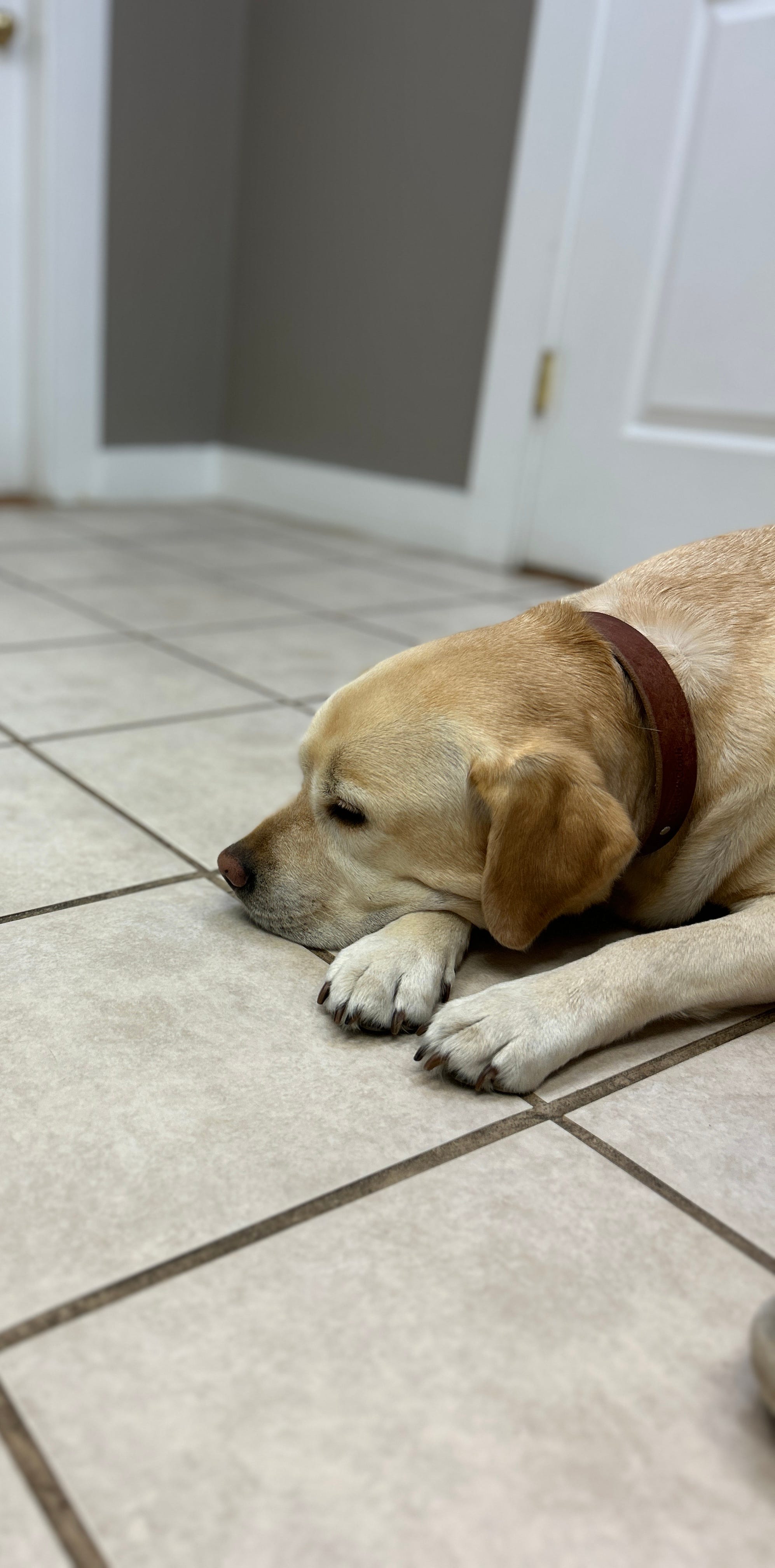
Our only focus was on Lewie - his health, his comfort, his life. But in the background, another reality pressed in. The cost. It’s even hard to write this – to admit that we were concerned about how much all of this was going to be – but it’s the reality of being a pet parent who is not a millionaire. Every step came with a new number attached. It’s not lost on us that many people are forced into impossible decisions in these moments - not because they don’t love their pets, but because the cost of saving them can be financially devastating.
Veterinary hospitals know this. They hand you a menu of options to choose from, each more expensive than the last. And they require payment up front. We understand why - we really do. They can’t provide care if people can’t pay. But standing there with your dog sick and scared, staring at numbers that climb higher and higher, it feels like a cruel twist of fate.
This story had a fortunate ending for all Lewie…and for us. When the surgery was over, the culprit was revealed: a decent-sized piece from a rubber ball that he must have found somewhere. That one piece of rubber cost $6,000. And, we were fortunate to have pet insurance for Lewie. After our first Lab, Indy, we got it for Lew, thinking we’d need it if he tore his ACL (a common injury for Labs). Luckily, it covers rubber balls, too. We still had to pay some out-of-pocket costs, but a large portion of the bill was covered.
If you can afford it, pet insurance is a lifeline - it won’t erase the fear when things go sideways, but it may give you the room to focus on what matters most: getting your dog the care they need.

Lewie, 1 week Post-Op and doing great!
But for many people, insurance isn’t an option - and that’s where community support matters. Some nonprofits and foundations step in to help with emergency veterinary bills. Knowing these resources exist and how to access them can be a real relief when the unthinkable happens (see list at the end of this article).
Because in those moments, there’s no question about whether you’ll do it. Of course you will. They’re family.
Charitable Resources for Veterinary Financial Assistance * We haven’t worked with these directly, but they’re recommended resources:
The Pet Fund - Provides grants for non-basic, non-emergency veterinary care, such as cancer treatment, heart disease, and other chronic conditions.
Frankie’s Friends Fund - Offers financial assistance grants (up to about $2,000) for emergency or specialty veterinary care when the alternative is surrender, euthanasia, or untreated suffering.
Paws 4 A Cure - An all-volunteer nonprofit that provides urgent financial assistance (up to ~$500) for veterinary care across the U.S., regardless of pet age, breed, or diagnosis.
RedRover Relief - Provides emergency grants (around $250) and emotional support for pet guardians in life-threatening situations, including support for families in domestic violence scenarios.
The Mosby Foundation - Offers one-time grants for critical, non-emergency veterinary treatments for dogs.
Onyx & Breezy Foundation - Provides veterinary care grants to families experiencing hardship.
Help-A-Pet - Helps pet owners across the U.S. afford veterinary services, medicine, or supplies for sick or injured pets.
Pets Are Wonderful Support (PAWS) — North American nonprofit(s) supporting elderly or disabled people by providing subsidized pet food, veterinary care, medication, and even assistance like dog-walking or transportation.
Banfield Foundation – HOPE Funds — Offers emergency financial assistance if your pet is suffering from a life-threatening condition; treatment must be provided at a Banfield Pet Hospital.
I am so glad everything worked out for your boy! I have been in your shoes many times and it is never easy…. but pet insurance is truly a lifeline! Thank you for sharing your experience, importance of pet insurance, and organizations who can help with the cost. Good luck on Lew’s recovery! 🐶
Prayers for Lewie.